Dear Friends:
I am moving my blog. This will be the last post here at this site. Please come find me at GabiStevens.wordpress.com at my new site. I've been double posting here and there for at least two years now, and the time has come to close this one. I hope you follow me there. I don't want to lose you.
--Gabi
Sunday, April 27, 2014


Favorties
The most interesting thing about having written a collection of short (short) stories is how everyone has a different favorite.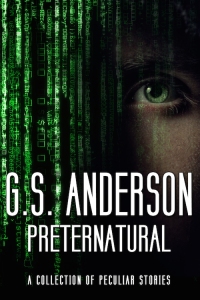 I like them all but even I have a couple that stand out as my favorites. The people who have previewed the stories all told me they enjoyed the entire collection, but X is their favorite. X has been different for each person. One friend like the first in the collection; my husband liked a totally different one. I find it so interesting that our tastes can vary so much. I also find it wonderful.
 I like them all but even I have a couple that stand out as my favorites. The people who have previewed the stories all told me they enjoyed the entire collection, but X is their favorite. X has been different for each person. One friend like the first in the collection; my husband liked a totally different one. I find it so interesting that our tastes can vary so much. I also find it wonderful.
Why so wonderful? There are books people rave about that I couldn't finish. (You know the one I'm talking about, Monique.) There are books I obsess about that I can't get others to read. What it shows is that there is room for everyone out there in the world of books. You may not like my books, but you'll rave over someone else's. Some author might leave you cold, but my books will carry you away to that magic world where you forget yourself. It's all good.
If we all liked the same thing, we'd all have to read (and eat, and view, and furnish our houses with) the same thing. Yuck. How boring. While I believe there is value in having common experiences in a culture , i.e., certain books, films, etc. that everyone has read or seen, you are still allowed to pick your favorites. And pick your unfavorites. Taste and sharing them or arguing over them makes life interesting.
Have I mentioned I don't like olives?
--Gabi
Books I'm reading now:
This Case is Gonna Kill Me by Phillipa Bornikova
Rosemary and Rue by Seanan MacGuire
A Game of Thrones by George RR Martin (reread)
Monday, January 20, 2014
The things that shape us
I was the child of immigrants and we didn't have lots of money when I was a child. And I lived in the poor section of an affluent town. At school there were always events, requirements, projects, trips that I either couldn't participate in fully. You know the old meme about Crayola crayons vs, Rose Art? That was my life, but we didn't even have Rose Art quality crayons.
One school I taught at had a blanket field trip form so the teachers/advisors could take their classes to a nearby coffee house/bakery. My kids were always begging me to take them. I never did, because I knew what it felt like to drink only water while everyone else had sodas or ice cream or lunch.
As an adult I've never had to worry about any of this. My kids got Crayola crayons and wore clothes that fit them (don't get me started on hand-me-downs when I was taller than most of the older kids we knew), but I have never forgotten what it feels like not to fit in.
Here's another perspective on this topic. When Elite Parents Dominate Volunteers
--Gabi
Books I'm reading now:
All Beautiful Things by Nicki Salcedo
Shadow of Night by Deborah Harkness
Prodigal Mage by Karen Miller
One school I taught at had a blanket field trip form so the teachers/advisors could take their classes to a nearby coffee house/bakery. My kids were always begging me to take them. I never did, because I knew what it felt like to drink only water while everyone else had sodas or ice cream or lunch.
As an adult I've never had to worry about any of this. My kids got Crayola crayons and wore clothes that fit them (don't get me started on hand-me-downs when I was taller than most of the older kids we knew), but I have never forgotten what it feels like not to fit in.
Here's another perspective on this topic. When Elite Parents Dominate Volunteers
--Gabi
Books I'm reading now:
All Beautiful Things by Nicki Salcedo
Shadow of Night by Deborah Harkness
Prodigal Mage by Karen Miller
Saturday, November 9, 2013
NaNoWriMo
I did it. This is the first time ever I've signed up for NaNoWriMo (National Novel Writing Month) and so far I am loving it. Let me give you my take on it and why it's working for me.
First off, the idea of writing 50,000 words in a month is not so daunting for me. I've done it before when I had deadlines and books due. The fastest I've ever written a book (rough draft) was two months. That was with A Matter of Pride and I just wanted to see if I could do it. Turns out it was one of my favorite books. (see the Pretty Baby post). Maybe it was because I knew what was going to happen (not plotting--I don't do much extensive plotting; I just have a general idea of what the story will be) and didn't leave myself time to second guess what I was putting on the paper. So this year, after many month of writing heartaches and pain, I needed something to kickstart my writing again. I had been plodding along, but I just wasn't feeling it. My daughter (one of the twins) is also a writer. Not published yet, but she is working on her second novel. She signed up for NaNoWriMo and asked me to as well. What the hell, I thought. So I did.
First off, the idea of writing 50,000 words in a month is not so daunting for me. I've done it before when I had deadlines and books due. The fastest I've ever written a book (rough draft) was two months. That was with A Matter of Pride and I just wanted to see if I could do it. Turns out it was one of my favorite books. (see the Pretty Baby post). Maybe it was because I knew what was going to happen (not plotting--I don't do much extensive plotting; I just have a general idea of what the story will be) and didn't leave myself time to second guess what I was putting on the paper. So this year, after many month of writing heartaches and pain, I needed something to kickstart my writing again. I had been plodding along, but I just wasn't feeling it. My daughter (one of the twins) is also a writer. Not published yet, but she is working on her second novel. She signed up for NaNoWriMo and asked me to as well. What the hell, I thought. So I did.
The thing about me is that I have an enormous responsibility streak in me. When I sign up for or commit to something, I do not shirk my duties. (Thus when I quit my volleyball team earlier this year--long story--you know it was a major issue that caused me to do that. Okay, you only have my word for it, but honestly, it was a big traumatic deal for me.) As soon as I signed up for NaNo in October, I started regretting it. Writing really did break my heart this year and last--several times--so I wasn't eager about doing NaNo. And then I started.
OMG (sorry). It's been fantastic! Not only have I reached the goal every day so far, the joy is back. I'm having such fun. Yes, it's work; yes, it's hard; yes, I've taken wrong turns and had to delete scenes; but I've always managed to make forward progress and like what poured out on the paper. I can't believe how much I look forward to facing the page (yes, I'm hand writing it, then transferring to computer) each day. That responsibility gene may have kick started me, but now it's me and I'm loving it.
Now I also have to make a confession. You're supposed to start Nano with a brand new work, from the beginning, with nothing written on it yet. I'm a rebel. I had a half finished novel that I'm working on, but honestly, 50,000 words is 50,000 words. I don't need validation from the website, I don't need to win any prizes, I just needed that responsibility gene to kick in (That gene is also why I'm so good on deadline--in ten published books, I haven't missed one yet and turned in nine of them at least a month early. Yes, I was that freak in high school and college who turned in term papers early too. Except once, when I wanted to experience what an extension felt like. I hated it. I had a semester and turned it in a week after the due date.)
So my words for today are done, I'm looking forward to tomorrow, and now I'm off to play. Or do laundry. Unfortunately real life does like to intrude.
--Gabi
Books I'm reading now
A Feast for Crows by George RR Martin
Books I'm reading now
A Feast for Crows by George RR Martin
Friday, October 25, 2013
Secrets in Books
Oooo, that sounds so ominous. Well, if not ominous, important, and actually this post is neither. But as I was re-reading and getting A MATTER OF HONOR ready for publishing as an ebook, I remembered so many things that were going through my mind as I was writing the novel. So I thought I'd share some of those secrets.
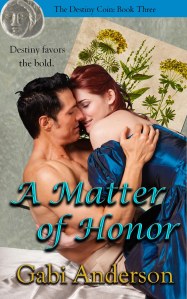
- A Matter of Honor: book 3 in the Destiny Coin series

First, I have to tell you about the heroine's name. Lorane didn't just pop into my head from nowhere. When I was a young girl, I was given a doll by bachelor friend of my parents. Yes, the bachelor part is important because he didn't have children, so he really didn't have any idea what an appropriate toy was for kids. He gave my sister and me dolls--dolls that go on display, not the kind you play with. These dolls had big eyes and were very stylized. My sister destroyed hers pretty quickly, but I had mine for years (even after I gave her way too much makeup with a marker). In fact my kids can remember that doll because I still had it as an adult. She fell apart about 15 years ago, but that doll was named Lorena and she lives on in my heroine.
The second secret about Lorane is that she was the easiest character I have ever written. Why? Because she's my husband. Okay, that sounds weird, but her focus-driven ways, her interest in science and her dedication to her work is as familiar to me as my own quirks because I've lived with them since I was married. My husband is just as focused, just as dedicated to his work, and can be just as, hmmm, shall we say unconcerned?-- about the real world as Lorane can be in the novel. The only time a review has ever truly hurt me was when one reviewer said she didn't like Lorane because she dealt with absent-minded people all the time and they drove her crazy. It hurt because my husband is such a wonderful man, so loving, so caring, but if I depended on romantic letters or gifts to show that he loved me, I'd be waiting a loooong time. Of course, I also think intelligence is the sexiest thing out there, more than abs, roses, or spewing poetry. Nerd girl here.
Another secret: To this day, I don't think I could recognize poison ivy. (You'll have to read the book to see why this is ironic.)
--Gabi
Books I'm reading now:
A Storm of Swords by George RR Martin
A Storm of Swords by George RR Martin
Saturday, October 12, 2013
Disney Dreams Part II
I love Disney and our vacation to Disney World was everything we hoped it would. Our family of five was together for the first time in over a year. ANd now that political reality has intruded its ugly head into our lives (my husband is about to be furloughed if the stupid ^&#$%(* in Congress continue to not do their jobs), I'm thrilled we took the time to have this vacation.
Day Three was spent at Animal Kingdom. We loved it. It was totally new to us, and fabulous. The Expedition Everest roller coaster was such a hit that three of us rode it twice. The Dinosaur ride took out two of us (upset stomachs). In my opinion, Dinosaur is just the Indiana Jones ride of Disneyland with a different theme. I made the same argument about Test Track--it's the Disney California Adventures Cars ride with a different theme (Test Track was first). Someone back me up here. But the animals at Animal kingdom made the whole park worth while. My second favorite park in the place.

- White Rhino at Animal Kingdom

That evening, after Animal Kingdom closed, we went to Epcot for dinner. We really just dashed through for food and then did a couple of rides before they closed for the night--Test Track, Nemo, and Soarin', which I will never go on again. I was laughing the whole way through because I was scared to death. It's the heights. I can't take them any more. Isn't it odd the fears we develop as we go through life. I'm not afraid of the height in a plane, but I am never climbing another tower as long as I live. And I had no issue in Tower of Terror the next day in Hollywood Studios either, but I couldn't ride on Soarin' without scrunching my eyes shut. My daughters were laughing at me too. It was actually quite amusing for all of us, including myself.
Anyway, back to Epcot. I had a chance to use my German in the German section, but only because my husband forced me to. I don't know why I suddenly got shy. Maybe it's because it's ben years since I've had a chance to use my German. Even when I was there a couple of years ago, I spoke Hungarian with my cousins. The food in the international part was amazing. So much so that we went back on Monday night for dinner in Morocco (best shish kebab I've ever had). And the beer in Germany was awesome. I miss German beer.
Hollywood Studios was my least favorite park. Too sunny, too hot, not enough trees, etc. We did do Star tours, which was fun because it's different from Disneyland, and saw the shows (Meh. I'm not much one for car stunts. I'm sure it's impressive, but I was hot and bothered.) Tower of Terror was great fun, and we stayed long enough to see Fantasmic.
Sunday two daughters left to return home for work, but three of us still had two days. Morning was spent saying goodbye, and then we donned bathing suits again and went to Blizzard Beach,..just in time for the second rain storm of our stay. Still we were getting wet anyway, and rain didn't stop us. I pushed my own limits and surprised myself at how much fun I had. I want to go back.
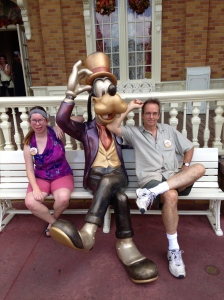
- My husband's favorite character

Dinner that night was spectacular. We ate at Artist Pointe in the Wilderness Lodge. I had the best scallops I've ever eaten. Husband had buffalo and venison, and the honored graduate had filet mignon. And it was on the meal plan!! So except for the appletini I had, it was essentially free. (It did cost double points, but somehow we had accumulated them so it was on the meal plan.) The food and atmosphere was sublime, and the resort was impressive. Now I know where the rich folks stay. Beautiful lodgings.
On our last day, we revisited Animal Kingdom because we were so taken with it. Magic Kingdom is still our favorite, but we see that a lot in California (only slight differences between the two), so Animal Kingdom it was in the morning, then back to Epcot to see the few things we missed, a few country presentations, and redo Nemo so we could explore the aquarium further. And that's when we had RAIN. We had ponchos and decided we wouldn't let the rain stop us, but we were soaked. What an adventure though. We went on most of the exhibits and saw most of the films, including Norway's. No offense to Norwegians--their country is beautiful--but why is Norway a country in the international plaza? There's no Brazil, no Egypt, no Australia, no Russia, no India, but they do have Norway. Is lutefisk such a delicacy? (I'm kidding, but my husband and I did make many jokes about it.) We buy a Santa figurine to add to our Christmas collection there. A Norwegian Santa is our Santa for 2013.
And the next day was home. Too sad. I don't even like to think about it. Our week was magical. Then it was back to reality: our remodeling has started, and then the politicians started playing idiotic games with our nation that directly impact me and my family. Our timing was really off on both the vacation and the remodeling--I'll know next week if we won't have income for a while--but I refuse to regret the week at Disney. It was worth every penny and we have so many memories to treasure.
--Gabi
Books I'm reading now:
Game of Thrones by George RR Martin
A Clash of Kings by George RR Martin
Thursday, October 3, 2013
Preternatura: Top 3 Things Gabi Stevens Has Learned From Writing...
Preternatura: Top 3 Things Gabi Stevens Has Learned From Writing...: Today, please help me welcome fellow Tor author and agent-mate Gabi Stevens! Gabi has stopped by today to talk about the things she has lear...
Subscribe to:
Posts (Atom)